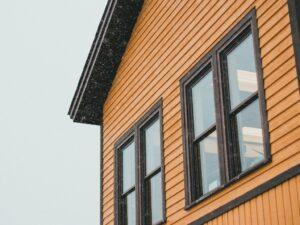

What is a picture window? A picture window is a large, fixed-pane window that doesn’t open. Its job is to frame a view, flood a room with natural light, and seal tighter than any operable window can. For Colorado homeowners with mountain views, big yards, or rooms that feel dim, a picture window is one of the highest-impact upgrades available. This guide covers when picture windows make sense, how to choose the right glass package for our climate, and how to know when an existing one needs replacement.
Ameritech Windows installs replacement picture windows across the Front Range. Request a no-pressure quote to talk through your home with a Colorado-based installer.
What Makes a Picture Window Different
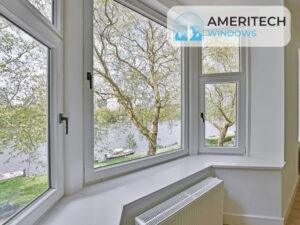
A picture window is a single fixed pane of glass set into a frame. No moving sashes, no hinges, no locks. The whole point is the view and the light. Because there are no moving parts, picture windows seal tighter than any operable window, which means lower energy loss, less air infiltration, and almost no maintenance over their service life.
Picture windows are typically built larger and with slimmer frames than other window types. The visible glass area is greater for the same wall opening, which is why they make rooms feel bigger and brighter. Pair them with operable windows on either side and you get the best of both: an unobstructed center view and ventilation when you want it.
Picture Windows vs. Other Fixed and Large Windows
Picture windows often get confused with other large window styles. The differences matter because each is the right answer for a different situation.
| Feature | Picture Window | Bay Window | Bow Window | Fixed Casement |
|---|---|---|---|---|
| Shape | Flat, single fixed pane | Angular three-section projection | Curved arc with multiple panels | Flat, single pane |
| Projects outward | No | Yes (12 to 24 inches) | Yes (curved) | No |
| Glass area | Maximum (slim frame) | Divided across 3 panels | Divided across 4 to 6 panels | Smaller (full frame) |
| Energy efficiency | Excellent (best seal) | Good (3 sections to seal) | Good (multi-panel seals) | Excellent |
| Best for | Maximizing view, modern look | Defined focal points, window seats | Wide panoramic views | Smaller view openings |
| Ventilation | None (pair with operable) | Side panels can open | End panels can open | None |
If you want maximum unobstructed view through a flat wall, a picture window is the simplest, most efficient choice. If you want a built-in window seat or a defined three-dimensional focal point, a bay window is the better fit. If you want a soft curved look and a wider continuous view, a bow window works.
Why Colorado Homeowners Pick Picture Windows
Picture windows perform especially well in Colorado for reasons that are specific to our climate and our views.
Mountain Views Deserve a Frame
Front Range homeowners often have a view that’s the entire reason they bought the house. A picture window puts a clean glass frame around it. No sash bars to break it up, no obstructions, no moving parts to interfere. For homes facing the foothills, the open plains, or a thoughtful backyard, a properly placed picture window changes the daily experience of the room.
Tighter Seals Through Temperature Swings
Colorado’s daily temperature swings are hard on operable windows. Sashes that open and close cycle through expansion and contraction at every joint. Picture windows have one continuous glass-to-frame seal that doesn’t move. That’s why properly built picture windows hold their seal longer than operable windows in Colorado homes.
Multi-Surface Low-E for Altitude UV
Picture windows are usually the largest windows in a home, which means they let in the most light and the most UV. Denver’s altitude means UV intensity is roughly 25 percent higher than at sea level. Multi-surface Low-E coatings on a picture window block the UV that fades flooring and furniture while letting visible light through. On a window this big, that’s not optional in Colorado.
Triple-Pane Glass on a Big Pane
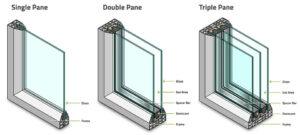
The bigger the glass, the more energy loss matters. Triple-pane glass with two gas-filled chambers cuts heat transfer significantly compared to double-pane on the same opening. For a large picture window, the comfort difference (no cold radiating off the glass in winter) is immediately noticeable.
Where Picture Windows Work Best in a Home
- Living rooms: A picture window centered on a feature wall becomes the room’s focal point. Pair with operable casements on either side for ventilation when needed.
- Dining rooms: A large picture window over the dining area changes how meals feel. Best when there’s a view worth keeping.
- Stairwell landings: Tall picture windows on staircases bring light into hallways and upper floors that often feel dim.
- Primary bedrooms: Used carefully (privacy and orientation matter), a picture window can frame a backyard view while operable windows handle airflow.
- Above other windows or doors: Transom-style picture windows above operable windows or sliding patio doors add height and light without sacrificing function.
Where picture windows usually don’t work: bathrooms (privacy), kitchens (you generally want ventilation over a sink or stove), and bedrooms in noisy areas where you’d want to open a window in the evening.
Signs Your Picture Window Needs Replacement
Picture windows are more durable than operable windows because they have no moving parts to wear out. But the glass seal and the frame still age, and Colorado’s climate accelerates that aging. Watch for these signs:
- Condensation between the panes: Moisture or fogging between glass layers means the insulating glass unit (IGU) seal has failed. The argon or krypton gas has escaped and the window is no longer insulating properly.
- Cold drafts near the glass: A picture window shouldn’t feel cold to stand near in winter. If it does, the seal has degraded or the frame has shifted.
- Visible frame damage: Warping, rotting, or cracking around the frame indicates moisture damage or UV degradation. Worse on the exterior than the interior.
- Faded interior finishes near the window: Carpet, hardwood, or furniture fading near the glass means UV is making it through. Modern Low-E coatings would block most of that.
- Higher heating and cooling bills year over year: Picture windows are large heat-loss surfaces when they fail. A degraded picture window often shows up first on the utility bill.
- Audible outside noise that wasn’t there before: Failed seals leak sound the same way they leak air.
If you’re seeing two or more of these, replacement makes sense. More on when to replace windows.
What to Look for When Buying a Replacement Picture Window
Picture windows are usually the most visible windows in a home, so the choices matter. Here’s what determines whether the replacement holds up.
Glass Package
- Triple-pane glass with argon or krypton fill: Standard for Ameritech installs, especially on large picture windows where heat loss is biggest.
- Multi-surface Low-E coatings: Block UV that fades interiors, manage solar heat gain, still let visible light through.
- Warm-edge spacers: Reduce edge condensation and heat transfer at the glass perimeter.
- Tempered or laminated glass in larger or lower-mounted units for safety.
Frame Material
- Hybrid vinyl-composite: The right pick for most Colorado homes. Combines low maintenance with dimensional stability.
- Fiberglass: Stronger, more stable, higher cost. Right for very large picture windows or harsh exposures.
- Vinyl: Affordable, low maintenance, but watch for warping with cheaper formulations.
- Wood with aluminum cladding: For homes that need a specific architectural look. Higher maintenance.
Slim Frame Profile
The visible difference between a great picture window and an average one is the frame proportion. A slim, well-engineered frame maximizes glass area and view. A bulky frame eats the view you paid for. Ask any installer to show you the actual frame profile before you sign.
Why Picture Windows Are an Easier Install Than Most
Because picture windows have no moving parts, the install is mostly about getting the rough opening right and getting the unit set perfectly square. A typical picture window replacement takes one crew about half a day for a single unit, longer for larger custom sizes. Our window installation process covers the full sequence.
One thing to watch for with picture window installs: handling. These units are heavy and the glass is large. Cheaper installers cut corners on lifting equipment, support, or the number of crew members on site. The result is glass damage during install or a unit that wasn’t set perfectly. We staff picture window installs with the right crew and the right gear from the start.
Common Mistakes to Avoid
- Buying a picture window without considering ventilation: A room with no operable windows on a hot summer day will feel sealed. Plan for at least one operable window in the room or on the exterior wall.
- Mounting too low or too high: Picture windows look best when sized and placed thoughtfully relative to the room and the view from inside.
- Ignoring solar gain: A west-facing picture window without proper Low-E coatings turns the room into an oven on summer afternoons. The glass package matters here.
- Cheap glass on a big surface: Skipping triple-pane on a large picture window is one of the most expensive shortcuts in window buying. The energy loss compounds for the life of the window.
- Forgetting about the exterior view: A picture window is also visible from outside. The exterior framing should look balanced from the curb.
Honest Tradeoffs of a Picture Window
- No ventilation: This is the obvious one. Always pair with operable windows nearby.
- Cleaning the exterior: Large fixed glass on a second story needs ladder access or professional cleaning.
- Solar gain on west-facing walls: Without proper Low-E, a big picture window facing afternoon sun will heat the room. Pick your glass package carefully.
- Higher up-front cost than smaller fixed windows: The glass area is bigger and the frame engineering is more demanding, which shows up in the quote.
- Privacy considerations: Large fixed glass means little visual privacy. Best for rooms facing yards or views, not streets or neighbors.
For most homeowners with the right wall and the right view, a picture window is worth the tradeoffs. For homes where any of those tradeoffs are dealbreakers, a smaller fixed window or a casement is a better fit.
Picture Windows: Frequently Asked Questions
What is a picture window?
A picture window is a large, fixed-pane window that doesn’t open. Its primary purpose is to frame a view and bring in natural light. Because there are no moving parts, picture windows seal tighter than operable windows and require almost no maintenance.
Are picture windows energy efficient?
Yes, when configured correctly. A picture window with triple-pane glass, multi-surface Low-E coatings, and warm-edge spacers is one of the most energy-efficient window types you can install. The fixed seal beats any operable window on air infiltration, and the glass package determines thermal performance. Skipping triple-pane or Low-E on a large picture window is the most common mistake.
Do picture windows open?
No. Picture windows are fixed by design. If you want a large window that also opens, you’d typically combine a picture window with operable casements or double-hungs on either side, or look at a fixed picture window paired with awning windows above or below.
How long do picture windows last?
A properly installed, quality picture window in Colorado typically lasts 25 to 30 years before the IGU seal degrades. Frame and structural elements can last longer if maintained. Cheaper picture windows installed badly can fail in 12 to 15 years, often through condensation between panes from a failed seal.
When should I replace my picture window?
Replace when you see condensation between the panes (failed seal), feel cold drafts near the glass in winter, notice frame warping or rotting, or see significant fading of nearby flooring and furniture. Picture windows that don’t open can’t be repaired the way operable windows sometimes can; once the IGU fails, replacement is usually the right call.
Are picture windows good for Colorado homes?
Yes, especially for homes with views worth framing. The best configurations for Colorado include triple-pane glass, multi-surface Low-E coatings, and a hybrid composite or fiberglass frame. With those features, a picture window handles altitude UV, dramatic temperature swings, and dry winter air remarkably well.
Can a picture window be added where there isn’t one currently?
Yes. Replacing a smaller window or a flat wall section with a new picture window opening is doable but requires structural and framing work. The wall above the new opening usually needs a new header to carry the load, and the exterior siding needs to be patched and finished. We assess feasibility, structural needs, and cost during the in-home consultation.
What’s the difference between a picture window and a fixed window?
Picture windows are a type of fixed window, distinguished by their larger size and slim frames. Smaller fixed windows are often used in tight spaces, alongside operable windows, or as accent shapes. Picture windows are the larger, view-focused version of the same fixed-glass concept.
Will a picture window make my room hotter in summer?
Without proper Low-E coatings, yes, especially on west and south exposures. With multi-surface Low-E coatings tuned for solar heat gain, a modern picture window blocks much of the unwanted heat while still letting visible light through. The orientation of the window and the glass package together determine summer comfort.
Are picture windows safe?
Yes. Modern picture windows use tempered or laminated safety glass in larger or lower-mounted installations as required by building code. Properly installed picture windows are at least as secure as operable windows because they have no movable parts to force open.
Get a Picture Window Quote in Colorado
A picture window is the right answer when you have a view worth keeping and a room that deserves more light. The right glass package, frame material, and install approach are what separate a window that performs for decades from one that fogs up in five years. Ameritech Windows installs picture windows across the Denver metro area and the Front Range with triple-pane glass, multi-surface Low-E, and a 40-year warranty.
Request a no-pressure quote and we’ll come measure your wall opening, talk through orientation and glass package options, and give you a clear, itemized proposal.
This article was drafted with the help of AI tooling and reviewed for accuracy by an Ameritech Windows installer with 30 years of Front Range experience. Examples and recommendations reflect what we actually install in Colorado homes.
GET FREE QUOTE!
Promo Ending Soon 09-01-2026
Locally owned and operated in Colorado for over 30+ years
Minimum purchase does apply and cannot be combined with any other discounts.*
Deal is for first time customers only.**
By submitting this form, I verify that the number provided is my mobile telephone number and I provide my express written consent for Ameritech Windows to contact me at this number via phone, email, and text message (SMS) using automated dialing technology for marketing purposes. I agree to the Terms and Conditions and Privacy Policy. Consent is not a condition of purchase. Message and data rates may apply. To opt out at any time, you may reply STOP to any text message or notify Ameritech Windows by telephone.