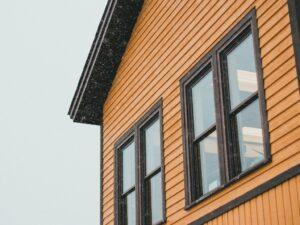

Black windows are having a moment. They show up in every modern-home magazine, every Pinterest board, every new build in Stapleton and Highlands. And they do look striking. But before you put black frames on a $30,000 window order, there are some specific reasons we steer Colorado homeowners away from them. Here’s the honest version, with the questions buyers actually ask.
Are black windows a good idea?
For most Colorado homes, no. Black windows look great on day one and lose their finish faster than any other color. Black frames absorb more solar heat than light-colored frames, and Colorado’s high-altitude UV speeds up fading, warping, and seal degradation. They are also more expensive up front and harder to keep looking clean. If you want the modern look without the long-term tradeoffs, dark bronze, charcoal, or interior-only black (with a lighter exterior) gives you most of the visual payoff without the durability hit.
That said, the right answer depends on which side of the window you’re talking about, which material you’re picking, and how much sun your home actually gets. The rest of this guide walks through the specific tradeoffs so you can decide for your house.
Do black windows fade in the sun?
Yes. Black windows fade noticeably faster than other window colors, and Colorado is one of the worst climates in the country for it. Three things drive the fading:
- UV intensity. At Denver’s altitude, UV radiation is roughly 25 percent stronger than at sea level. That UV breaks down the pigments and finishes that give black frames their color.
- Heat absorption. Black frames absorb significantly more solar heat than white or beige frames. Surface temperatures on a south-facing black frame in July can exceed 160°F. Heat accelerates pigment degradation and stresses the substrate underneath.
- Pigment chemistry. Black is harder to formulate UV-stable than lighter colors because it has to contain more of the pigments and absorbers that themselves break down under sun.
You’ll typically see the first signs of fade (a chalky, dusty-looking surface, or a shift from deep black to a flat charcoal) within 3 to 7 years on a south- or west-facing exposure. North-facing windows hold up much longer. East- and west-facing windows are middle of the pack.
What problems do black vinyl windows have?
Black vinyl is the riskiest combination. Vinyl is more thermally reactive than aluminum or composite, which means it expands and contracts more with temperature swings. Pair vinyl’s thermal sensitivity with black’s heat absorption and you compound the problem. The specific failure modes we see in Colorado:
- Warping. Black vinyl frames can bow or twist when one side heats up while the other stays cool. Once a frame warps, the weatherstripping no longer compresses evenly, and the seal leaks.
- Seal failure. Heat-driven expansion stresses the glazing seals around the insulated glass unit. When those seals break down, the argon or krypton gas escapes and the window loses its insulating value.
- Hardware drift. Locks, balances, and rollers are calibrated to a frame’s intended dimensions. When a frame warps, hardware starts dragging, sticking, or refusing to latch.
- Voided warranties. Several major vinyl window manufacturers will not warranty black or dark-colored vinyl frames at all, or apply a shorter limited warranty to dark colors specifically because of these failure rates. Always read the warranty exclusion list before signing.
If you absolutely want a black exterior look on a vinyl window, the safer path is a “capstock” or laminate construction where black is applied as a thicker UV-resistant layer over a lighter substrate. It’s more expensive but it’s purpose-built for this problem.
Are black windows more expensive?
Yes. Black windows typically cost 10 to 25 percent more than the same window in a standard color. The premium comes from several places:
- Pigment and additive cost. The UV-stable pigments and chemistry that hold up to sun cost more than standard color formulations.
- Manufacturing process. Dark colors are harder to QC for consistency, so reject rates are higher and the surviving units carry the cost of the rejects.
- Capstock or coatings. Many manufacturers add a clear protective topcoat or thicker capstock layer to dark frames, which adds a step (and cost) to production.
- Reduced supplier competition. Fewer suppliers offer dark-color options that perform in Colorado conditions, which means less competitive pricing.
On a whole-house window order, the upcharge for black exteriors can add $2,000 to $6,000 to the total, depending on window count and size. That’s before you factor in the higher likelihood of needing replacement sooner.
How black windows compare to other colors
A side-by-side look at how the common window colors perform in Colorado’s climate:
| Color | UV / Fade Resistance | Heat Absorption | Cost Premium | Maintenance |
|---|---|---|---|---|
| White | Excellent | Lowest | Baseline | Easy |
| Beige / Tan | Very good | Low | 0 to 5% | Easy |
| Bronze / Dark Brown | Good | Moderate | 5 to 15% | Moderate |
| Charcoal / Dark Gray | Fair to good | High | 10 to 20% | Moderate |
| Black | Poor in Colorado sun | Highest | 10 to 25% | High (shows dust) |
What about black on the interior only?
This is the move we recommend if you love the black-window look. Most quality window manufacturers offer two-tone configurations: black (or any dark color) on the interior, with a lighter, UV-stable color on the exterior. You get the modern interior aesthetic without exposing the dark finish to Colorado’s sun.
The exterior color drives the durability outcome. The interior color is mostly a design choice with no thermal or fade consequence. Interiors don’t see direct sun the way exteriors do, and interior temperatures are stable. So an “exterior dark bronze, interior black” combination gives you the look most homeowners want with none of the long-term tradeoffs.
Are black windows harder to clean?
Yes, noticeably. Black frames show every speck of dust, every water spot, every pollen layer, and every smudge from a kid’s handprint. White and beige frames hide these between cleanings. Black frames don’t.
In a high-pollen Denver spring or after a windstorm carrying Plains dust, expect to wipe black exterior frames down every couple of weeks if you want them to look like the showroom photo. Interior black frames are easier (less environmental dust) but they still show fingerprints around the latches and handles.
What color windows should you get instead?
For Colorado homes, the colors that consistently hold up best on the exterior are:
- White: Always the safest pick. Lowest heat absorption, highest UV stability, cheapest to maintain, easiest to match with any siding.
- Beige or tan: Works on most exterior color palettes, hides dust better than white, still very UV-stable.
- Dark bronze: Gives you the “darker frame” modern look without going all the way to black. Holds up much better than black under Colorado UV.
- Charcoal: Almost-but-not-quite-black. Reads as black from across the street but uses a more UV-stable pigment formulation.
And if you really want black: pair a lighter exterior color (bronze or charcoal) with an interior black finish, or specifically ask for a capstock-construction window rated for dark colors with the manufacturer’s full warranty intact.
Frequently Asked Questions
Do black windows fade?
Yes. Black windows fade faster than any other color, especially in Colorado’s high-altitude UV. Most show visible fade within 3 to 7 years on south or west-facing exposures.
Why are black windows more expensive?
UV-stable pigments cost more, dark-color manufacturing has higher reject rates, and many windows require an additional capstock or topcoat layer to perform. The combined effect is a 10 to 25 percent premium over the same window in a standard color.
Do black windows cost more to replace later?
Two ways. The replacement window itself costs the same upcharge as the original. And black windows typically need replacement sooner because of fade and warp, which compounds the lifetime cost compared to a lighter color that lasts the full 20 to 30 year window lifespan.
Are problems with black vinyl windows covered under warranty?
Often not. Several vinyl window manufacturers specifically exclude or limit warranty coverage on dark-colored vinyl due to known thermal expansion and seal failure rates. Always read the warranty exclusion list, especially the heat-distortion clause, before signing.
Can I just get black windows on the interior?
Yes, and this is what we recommend if you love the look. Most manufacturers offer two-tone color options. Specify a UV-stable exterior color (bronze, charcoal, or a darker brown) paired with a black interior finish. You get the modern interior aesthetic without exposing the dark color to Colorado sun.
The bottom line
Black exterior windows look great in a brochure and look worse every year they’re installed in Colorado. The honest answer is that the climate and the color don’t get along: high UV, big temperature swings, and high heat absorption stack the deck against the finish. Dark bronze, charcoal, or interior-only black gives you nearly the same visual outcome with much better longevity, lower cost, and an intact warranty.
If you’d like a hands-on look at color and material combinations that work for your specific exposure, contact Ameritech Windows for a free in-home consultation. We can show you UV-rated samples, walk through how each option will weather over time, and give you a no-pressure quote.
GET FREE QUOTE!
Promo Ending Soon 11-01-2026
Locally owned and operated in Colorado for over 30+ years
Minimum purchase does apply and cannot be combined with any other discounts.*
Deal is for first time customers only.**
By submitting this form, I verify that the number provided is my mobile telephone number and I provide my express written consent for Ameritech Windows to contact me at this number via phone, email, and text message (SMS) using automated dialing technology for marketing purposes. I agree to the Terms and Conditions and Privacy Policy. Consent is not a condition of purchase. Message and data rates may apply. To opt out at any time, you may reply STOP to any text message or notify Ameritech Windows by telephone.