What are replacement bay windows? A bay window is a three-panel window unit that projects outward from a home’s exterior wall, with a large fixed center window flanked by two smaller angled windows on each side. Replacement bay windows take out an aging or inefficient unit and install a new energy-efficient version, adding light, interior space, and architectural character to your home.
What Is a Replacement Bay Window?
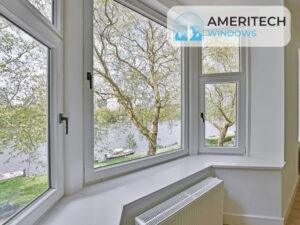
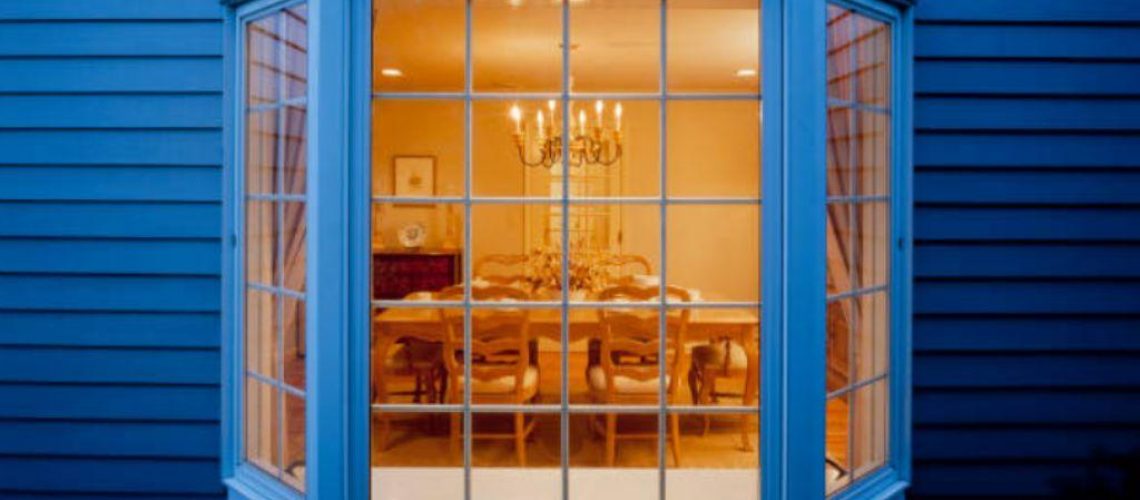
A replacement bay window is a pre-assembled, three-section window unit that fits into your existing wall opening. The unit projects outward at sharp angles, creating a shallow extension of interior space. Most bay windows include:
- A large fixed center window for an unobstructed primary view
- Two smaller angled side windows, which can be casement, double-hung, or fixed
- A projecting frame that extends outward at 30, 45, or 90 degrees, forming a built-in ledge or window seat below
A replacement bay window is different from a new-construction bay window. New-construction units install when the wall is being framed or rebuilt and have nailing fins on the exterior. Replacement units are designed to drop into an existing opening, preserving your wall, trim, and framing. That difference saves time, cost, and disruption to your home.
Bay Windows vs. Bow Windows vs. Picture Windows
Bay windows are often confused with bow and picture windows. Each unit serves a different purpose, and the right choice depends on your wall opening, your view, and the look you want.
| Feature | Bay Window | Bow Window | Picture Window |
|---|---|---|---|
| Shape | Angular, three-section projection | Smooth curved arc with multiple panels | Flat, single fixed pane |
| Number of panels | 3 (one center, two angled sides) | 4 to 6 equally sized panels | 1 |
| Projection | Yes, projects outward 12 to 24 inches | Yes, gentle curved projection | No, flush with wall |
| Opens for ventilation | Side windows can open | End panels can open | No, fixed glass only |
| Best for | Defined focal points, window seats | Wide panoramic views, soft architectural lines | Maximizing view through a flat wall |
| Look | Sharp, traditional, defined | Soft, curved, elegant | Clean, modern, minimal |
If you want a built-in window seat with a clear focal point, a bay window is usually the right pick. If you want a smoother curved look and a wider continuous view, a bow window is a better fit. If you want to maximize an unobstructed view without ventilation, a picture window is the simplest, most efficient option.
Signs It’s Time to Replace Your Bay Window
Some homeowners wait until a bay window fails completely before replacing it. That’s almost always a mistake. Bay windows project outward, which means a failed seal or leaking frame can cause moisture damage to the wall structure below. Watch for these signs and act before secondary damage starts:
- Drafts or cold air near the window when it’s closed (failed seals or weatherstripping)
- Foggy or cloudy glass with moisture between the panes (broken insulating glass unit)
- Warped, soft, or rotting frames from years of moisture exposure
- Difficulty opening or locking the operable side panels
- Visible gaps where the unit meets the wall, exterior trim, or interior trim
- Sagging or settling of the projecting unit (structural support failure)
- Condensation on interior glass that wasn’t there in past winters
- Faded interior finishes from UV exposure through outdated glass
Most bay windows last 15 to 30 years depending on materials, exposure, and quality of the original installation. If yours is approaching the upper end of that range, planning a replacement now is smarter than waiting for a failure that damages surrounding walls and floors.
Benefits of a Replacement Bay Window
A replacement bay window does more than fix existing problems. It changes how a room feels and adds practical benefits homeowners notice every day.
More Natural Light From Multiple Angles
Because bay windows have three sections facing slightly different directions, light enters from multiple angles throughout the day. Rooms that previously felt dim become bright and welcoming. The angled side windows pick up morning or evening light that a flat window would miss.
Built-In Window Seat or Display Space
The projecting frame creates a small extension of usable interior space. Homeowners turn this into a window seat with cushions, a built-in storage bench, a plant display, or a reading nook. It’s not a structural addition, but it adds functional square footage without expanding your home’s footprint.
Ventilation Options
Unlike picture windows, bay windows can include operable side panels for ventilation. Casement side windows crank outward and catch breezes effectively. Double-hung side windows slide vertically for more traditional control. The center window stays fixed for the cleanest possible primary view.
Improved Curb Appeal and Resale Value
From the outside, a bay window adds depth and architectural detail to a flat exterior wall. It’s a recognized quality feature that buyers notice immediately. In Colorado’s competitive real estate market, distinctive architectural features like bay windows consistently rank among the upgrades that shorten time on market and support stronger asking prices.
Modern Energy Efficiency
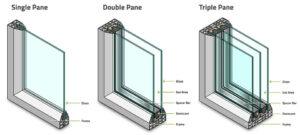
Today’s energy-efficient bay windows look nothing like the drafty bay windows of past decades. Modern units feature triple-pane glass, two insulating gas chambers, multiple Low-E coatings, and warm-edge spacers. The improvement is dramatic. A new bay window with these features can cut window-related energy loss by 30 to 50 percent compared to single-pane or early double-pane units.
Why Bay Windows Work Especially Well in Colorado
Colorado’s climate is harder on windows than most parts of the country, and bay windows are no exception. The combination of high-altitude UV intensity, dramatic daily temperature swings, dry air, and heavy snow loads pushes window components to their limits. A modern, properly configured bay window holds up to all of it.
Triple-Pane Glass Handles Temperature Swings
A 70-degree morning followed by a 30-degree afternoon is normal in Colorado. Triple-pane glass with two gas-filled chambers stays dimensionally stable through these swings, preventing the seal stress that fails older double-pane units. For bay windows specifically, where three sections all need to maintain seals, triple-pane technology is particularly valuable.
Multi-Surface Low-E Coatings Block Altitude UV
Denver and the Front Range sit a mile above sea level, and UV intensity is roughly 25 percent higher than at sea level. A bay window with Low-E coatings on multiple glass surfaces blocks the UV radiation that fades furniture, flooring, and artwork while still letting visible light through. That matters more in Colorado than almost anywhere else in the country.
Hybrid Composite Frames Resist Warping
Vinyl frames can warp under repeated freeze-thaw cycles. Wood frames need constant maintenance against altitude UV and moisture. Hybrid vinyl-composite frames combine the low maintenance of vinyl with the dimensional stability needed for Colorado’s climate, keeping bay window seals intact for decades.
Built to Handle Snow Loads
Bay windows project outward, which means the roof or cap above the unit takes on snow loads. A properly engineered replacement bay window includes adequate structural support and a sloped cap that sheds snow rather than letting it accumulate. For Colorado homes that see heavy snow, this engineering matters as much as the glass itself.
What to Look For in a Replacement Bay Window
Choosing a replacement bay window isn’t just about size and shape. The frame material, glass package, and configuration all affect comfort, durability, and long-term value.
Frame Material
The frame holds the entire bay window assembly together and determines how it weathers Colorado’s climate.
- Vinyl: Affordable, good insulator, virtually maintenance-free, but can warp under extreme temperature swings
- Wood: Classic look, naturally insulating, but needs regular painting and sealing to survive Colorado UV and moisture
- Fiberglass: Stronger than vinyl, doesn’t warp, resists weather damage, but priced higher
- Hybrid composite: Combines low-maintenance vinyl exterior with composite stability inside; the best balance for Colorado homes
Glass Package
- Triple-pane glass: Three layers of glass with two gas-filled chambers; dramatically better insulation than double-pane
- Low-E coatings: Microscopic coatings that reflect heat while letting visible light through; best when applied to multiple surfaces
- Argon or krypton gas fill: Inert gas between panes that insulates better than air
- Warm-edge spacers: Modern composite spacers that reduce heat transfer at the glass edges
Configuration
You don’t have to match your old window exactly. When planning a replacement, ask yourself:
- Do you want side windows that open for airflow, or are fixed sides fine?
- What angle works best for your wall and view: 30, 45, or 90 degrees?
- Would you build a window seat below the bay, and how deep does the projection need to be?
- Should the side windows be casement (cleaner view, side-hinged) or double-hung (more traditional, vertical slide)?
How Bay Window Replacement Works
Most homeowners don’t realize how detailed bay window installation is. The unit projects outward, takes on snow and rain loads, and ties into both interior and exterior finishes. A complete replacement involves several stages:
- Inspection and measurement: A pro checks the existing opening, the wall structure, and the projection depth, then confirms angle and panel sizes
- Custom ordering: Bay windows are built to fit; lead times typically run 4 to 6 weeks
- Old window removal: The existing unit comes out carefully, preserving the rough opening and exterior wall
- Prep and structural check: Any rotted framing, failed flashing, or missing insulation gets repaired before the new unit goes in
- Installation: The new bay window is set, leveled, and mechanically secured. Support cables or brackets carry the weight of the projecting unit
- Weatherproofing: Flashing, sealants, and insulation block air and water at every joint
- Interior finish: Trim is reinstalled or replaced, the window seat or sill is finished, and joints are caulked
- Exterior finish: Exterior trim, cap, and siding are restored to integrate with your home
Most replacements take one full day. Homes with hidden water damage, custom cladding, or non-standard openings may need two days. A reputable installer will walk through the project timeline before starting.
How to Measure a Bay Window for Replacement
If you want a rough sense of the size before getting quotes, here’s how a pro measures a bay window. Final measurements should always be confirmed by an installer before ordering.
- Width: Measure inside the frame from side to side at the top, middle, and bottom. Use the smallest of the three numbers.
- Height: Measure from the top of the frame to the sill on the left, center, and right. Use the shortest measurement.
- Depth: Measure how far the bay projects from the exterior wall, from interior trim to outside trim.
- Angle: Bay windows typically use 30, 45, or 90-degree angles between sections. The angle changes the wall opening width and the look of the unit.
Use a steel tape measure rather than a fabric one, and avoid rounding. Even small errors in width or angle can mean a custom unit that won’t fit, which is an expensive mistake to fix.
When a Bay Window Isn’t the Right Fit
Bay windows are a great upgrade in many situations, but they’re not the right answer for every wall. They’re a poor fit when:
- Your wall opening is narrow. Bay windows need a reasonable width to look proportional. A narrow opening looks better with a flat picture or double-hung window.
- Exterior projection is restricted. Some homeowner associations or local setback rules limit how far a window can project outward. Check your covenants before planning a bay.
- Your wall structure can’t support the projection. Bay windows are heavy, especially with triple-pane glass. Walls without adequate structural support need engineering work, which adds cost.
- You want maximum simplicity in cleaning. Three angled sections take longer to clean than a single flat window, and the exterior of the side panels is harder to reach.
- Your view is best framed by a single panel. If you have one specific view (a mountain peak, a tree, a courtyard), a picture window or single fixed pane often frames it better than a divided three-section bay.
A reputable installer will tell you when a bay window isn’t the right fit and recommend an alternative that better serves your home.
Repair vs. Replace: How to Decide
Not every bay window problem calls for a full replacement. Here’s how to think about the decision:
Repair Makes Sense When
- The problem is cosmetic (scratches, surface dings, minor finish wear)
- The exterior caulking or sealant is the issue and the underlying frame is sound
- A single pane of glass cracked but the IGU and frame are intact
- One piece of operable hardware (lock, hinge, sash balance) failed
Replacement Makes Sense When
- The frame is rotting, warping, or showing widespread water damage
- The IGU is foggy or has visible moisture between panes
- The unit no longer opens, closes, or locks reliably
- Energy bills have crept up and you can feel drafts near the window in winter
- The bay is sagging or settling under its own weight
- You’re planning to stay in the home and want decades of better performance
If you’re seeing two or more of the replacement signs, repair work usually just delays the inevitable, and the secondary damage from waiting often costs more than the replacement itself.
Honest Tradeoffs of a Replacement Bay Window
A replacement bay window is a high-impact upgrade, but it’s not the right pick for every home. The honest tradeoffs are worth knowing before you commit:
- Higher initial investment than a flat window. Bay windows cost more than a single double-hung or picture window of similar opening because of their multi-panel construction and structural support requirements.
- More cleaning surface area. Three glass sections at varied angles take longer to clean than a single flat unit, especially on the exterior.
- Longer lead times. Bay windows are custom-built, so order-to-install typically runs 4 to 6 weeks rather than the 2 to 3 weeks common for flat replacement windows.
- Window seat depth is limited. A typical bay projection is 12 to 24 inches, deep enough for cushions and a small reading area but not for a true bench seat with a full-depth backrest.
- Snow load engineering matters. The cap above the unit must shed snow, and the support brackets must carry the projecting weight. Cutting corners on either creates problems years later.
For most homeowners with the right wall and the right view, a bay window is worth the tradeoffs. For homes where any of those tradeoffs are dealbreakers, a flat picture or double-hung window will serve better.
Questions to Ask Before You Buy
Before committing to a replacement bay window, here’s what a homeowner should ask any installer:
- Are the products ENERGY STAR certified for our climate zone?
- Who installs the window: your team, or a subcontractor?
- Is the labor warranty separate from the manufacturer’s product warranty, and how long does each cover?
- What’s the lead time from order to install?
- Do you handle permits, if our jurisdiction requires them?
- What’s the structural plan for supporting the projecting unit?
- How will the cap above the bay be detailed for snow shedding?
- What happens if the existing wall has hidden damage when the old unit comes out?
You deserve clear answers. If a contractor hesitates or dodges, look elsewhere. A bay window is a long-term investment in your home, and the installer’s process should be transparent.
Bay Window Replacement: Frequently Asked Questions
What is a bay window?
A bay window is a three-section window unit that projects outward from a home’s exterior wall. It typically has a large fixed center panel flanked by two smaller angled side panels, creating a small interior alcove and a wider view than a flat window of similar dimensions.
What’s the difference between a bay window and a bow window?
The main differences are shape and panel count. Bay windows have an angular three-section projection with a large center panel and two smaller angled sides. Bow windows have a smooth curved arc with 4 to 6 equally sized panels. Bay windows look sharper and more traditional; bow windows look softer and more curved. Bay windows are also typically less expensive than bow windows of similar wall opening width.
How long does bay window replacement take?
For an existing bay window opening, replacement typically takes one full day with a professional crew, including removal, installation, weatherproofing, and trim work. If the wall has water damage hidden behind the old unit, or if you’re replacing a flat window with a new bay, the project may take two days due to structural and exterior work required.
Are replacement bay windows energy efficient?
Modern replacement bay windows are highly energy efficient when configured with triple-pane glass, multi-surface Low-E coatings, insulated frames, and quality weatherstripping. For Colorado homes, an ENERGY STAR-certified bay window with these features can reduce window-related energy loss by 30 to 50 percent compared to older single or double-pane units.
Can I replace a flat window with a bay window?
In most cases, yes. The wall opening needs to accommodate the bay’s projection and angle, and structural support must be added to carry the unit’s weight, including snow loads in Colorado. A professional installer will assess your wall, exterior cladding, and any HOA setback requirements before quoting the project.
Do bay windows add value to a home?
Yes. Bay windows are a recognized quality upgrade that buyers notice immediately. They add architectural detail, increase natural light, and signal that the home has been well maintained. In Colorado’s competitive real estate market, bay windows often shorten time on market and support stronger asking prices.
What’s the best frame material for bay windows in Colorado?
Hybrid vinyl-composite frames offer the best balance for Colorado’s climate. They combine the low-maintenance benefits of vinyl with the dimensional stability of composite materials, resisting warping from temperature swings while keeping triple-pane glass seals intact for decades. Wood frames are beautiful but require constant maintenance against altitude UV and moisture cycles.
Should the side windows of a bay open or stay fixed?
That’s a personal call. All-fixed bay windows are the most energy-efficient and easiest to maintain. Operable side windows (casement or double-hung) add ventilation and are great for living rooms or bedrooms where a cross-breeze matters. Most homeowners pick operable sides for the airflow and accept the small efficiency tradeoff.
What angle works best for a bay window?
The most common angles are 30, 45, and 90 degrees. A 30-degree angle creates a shallow, gentle projection. A 45-degree angle is the most popular choice and balances projection depth with interior space. A 90-degree angle creates a square-cornered bay with the deepest interior alcove and the most usable window seat space. The right angle depends on your wall, your view, and how you plan to use the interior space below.
Are bay windows a good fit for Colorado homes specifically?
Yes, especially when configured for our climate. Modern bay windows with triple-pane glass, multi-surface Low-E coatings, hybrid composite frames, and properly engineered snow caps handle Colorado’s altitude UV, dramatic temperature swings, dry winter air, and snow loads remarkably well. They’re popular across the Denver metro area, Boulder, Colorado Springs, and the Front Range for both their performance and their ability to frame mountain views.
Get a Replacement Bay Window Quote in Colorado
Ameritech Windows installs replacement bay windows across the Denver metro area and the Front Range. Every quote includes a full assessment of your wall structure, frame material recommendations matched to Colorado’s climate, glass package options, and a clear timeline from order to install. Request a quote or learn more about our window installation process.
This article was drafted with the help of AI tooling and reviewed for accuracy by an Ameritech Windows installer with 30 years of Front Range experience. Examples and recommendations reflect what we actually install in Colorado homes.
GET FREE QUOTE!
Promo Ending Soon 09-01-2026
Locally owned and operated in Colorado for over 30+ years
Minimum purchase does apply and cannot be combined with any other discounts.*
Deal is for first time customers only.**
By submitting this form, I verify that the number provided is my mobile telephone number and I provide my express written consent for Ameritech Windows to contact me at this number via phone, email, and text message (SMS) using automated dialing technology for marketing purposes. I agree to the Terms and Conditions and Privacy Policy. Consent is not a condition of purchase. Message and data rates may apply. To opt out at any time, you may reply STOP to any text message or notify Ameritech Windows by telephone.